Summer watering restrictions in Osoyoos and Oliver are common through the warmer months, and the specific stages and allowed days can change by season, year, and drought conditions. Many homeowners worry that water conservation means sacrificing curb appeal, but that's simply not true. Here are five practical strategies that can significantly reduce water use — depending on the property, planting choices, irrigation setup, and maintenance — while improving your landscape's health and appearance.
1. Zone Your Irrigation by Water Needs
The biggest water waste we see in Osoyoos and Oliver comes from treating all plantings the same. Your established native shrubs don't need the same water as your vegetable garden. Divide your property into hydrozones:
- High water zone: Vegetable gardens, annual flowers, new plantings (first 2 years)
- Moderate water zone: Established lawns, most perennials, ornamental trees
- Low water zone: Drought-tolerant shrubs, xeriscape areas, native plants
Install separate irrigation zones for each area. This lets you water high-need areas more frequently while low-water zones get watered far less often, or not at all once established. In Osoyoos's sandy soil, this targeted approach can meaningfully reduce water use compared to watering everything the same.
2. Reduce Lawn and Add Lower-Water Landscaping
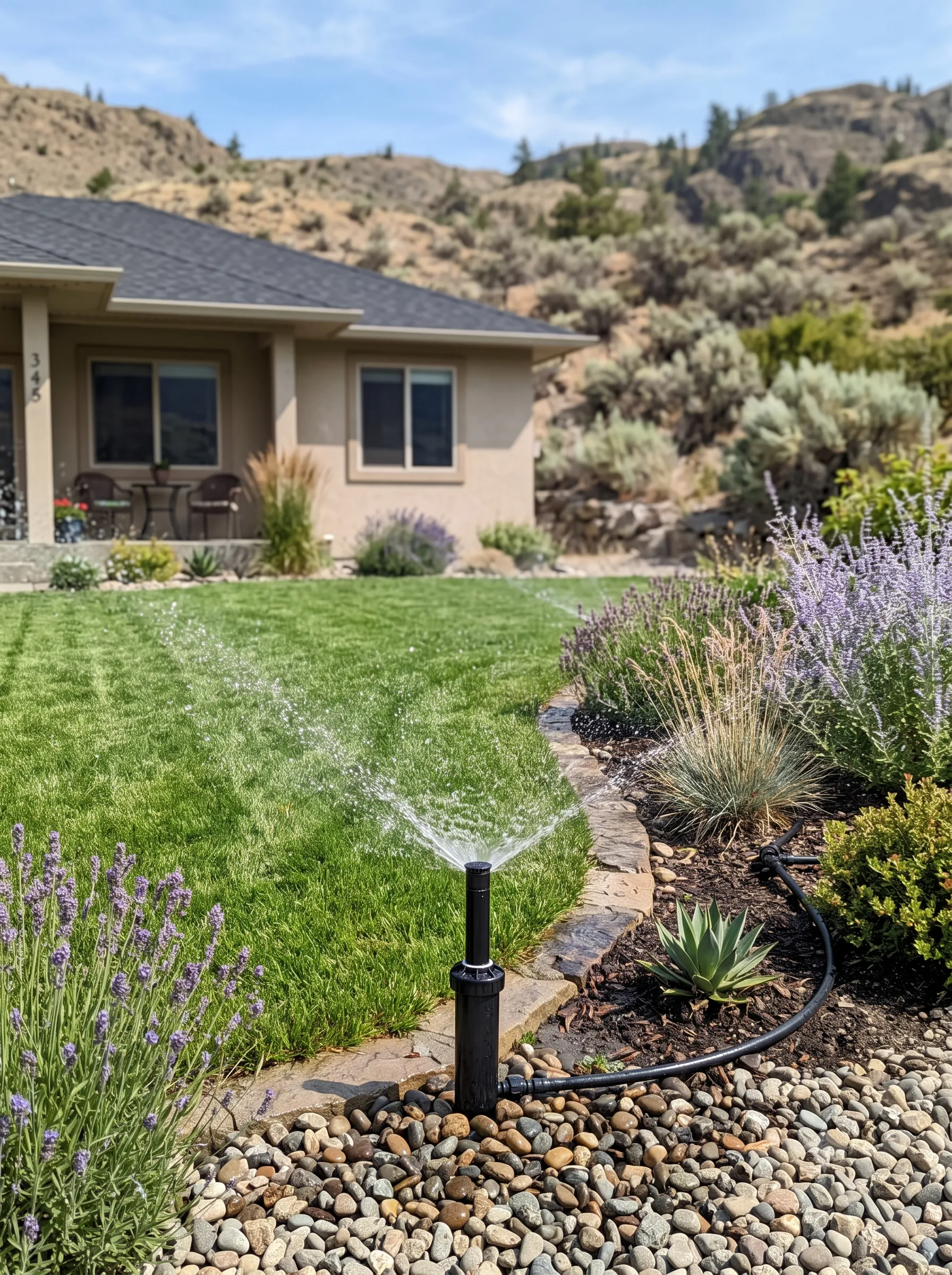
Lawns are typically among the biggest water consumers in South Okanagan landscapes. We're not suggesting you eliminate grass entirely — a lawn area serves important recreational and aesthetic functions — but reducing the amount of turf and replacing part of it with lower-water landscaping can significantly cut outdoor water use.
Options for replacing removed turf include:
- Perennial gardens with drought-tolerant plants and groundcovers (sedum, kinnikinnick, lavender, yarrow)
- Decorative rock with accent plantings
- Paving stone patios and hardscaping that expand usable outdoor space
- Drip-irrigated planting beds
- True xeriscape using drought-adapted and native plants — one available option among several
How much lawn to keep and how much to convert depends on the property, how the space is used, and the homeowner's goals. Rather than applying a fixed formula, Rocks N Blocks assesses each property individually and recommends an approach that fits the site. The water savings depend on the property, planting choices, irrigation setup, and maintenance.
3. Embrace Drip Irrigation for Gardens and Beds
Drip irrigation delivers water directly to root zones at low rates — more efficient than spray heads in our hot, windy climate. Watering rules can differ for drip versus spray systems, so always follow the current Town of Osoyoos and Town of Oliver regulations in effect. Drip is a strong choice for perennial gardens, planting beds, xeriscape areas, and new plantings that need establishment watering.
A well-designed drip system uses considerably less water than equivalent spray irrigation. For new installations, always zone drip separately from spray heads so each can be scheduled independently.
Watering timing matters enormously in the South Okanagan. Water lawns and spray-irrigated areas during the permitted morning watering window under the current municipal regulations, when wind is calmer and evaporation is lowest. For drip-irrigated areas, timing is less critical since water goes directly to roots — run drip systems as needed for plant health, including daily for new plantings during establishment.
For established lawns on spray systems, less frequent but longer watering cycles encourage deeper roots and better drought resilience. For new plantings and gardens on drip, consistency is more important than frequency — keep root zones consistently moist until plants establish.
Implementation Timeline
You don't need to implement all strategies at once. Here's a realistic timeline:
- Spring (March-April): Adjust watering schedules, add drip zones where missing
- Late Spring (May): Check controller programming before watering restrictions begin
- Fall (September-October): Plan lawn reduction and lower-water landscaping for next year
- Next Spring: Implement turf reduction and zone irrigation upgrades
Local Resources
Check with the Town of Osoyoos and Town of Oliver for current water restriction stages and allowed watering days. Both municipalities publish detailed watering guidelines on their websites. The Okanagan Basin Water Board also offers excellent resources on water-wise landscaping specific to our region.
Water conservation matters more in the South Okanagan as our summers get hotter and drier. With these strategies, you can meaningfully reduce water use while creating a more beautiful, resilient landscape that thrives in our climate. If you need help implementing any of these approaches, Rocks N Blocks provides consultations for Osoyoos and Oliver properties.
Share this article:
Ready to Transform Your Landscape?
Get expert help from the team writing these guides. Free estimates for all Osoyoos and Oliver properties.